Fall of the Solar Federation (MS)
Agenda to be announced
FSF— Specialized Crisis
A speculative crisis committee set at the collapse of an interplanetary federation. Directives move fast, alliances shift faster, and every decision reshapes the map. Built for middle-school delegates who want depth, drama, and directive-writing.
“Come prepared, come curious. This room rewards delegates who read past the headlines and negotiate like the stakes are real — because in the room, they are.”
Research a country's foreign policy, structure arguments, defend a position under pressure, and negotiate consensus with delegates you disagree with.
Move the room from opposing opening statements to a passable resolution — the kind that reflects the realities of specialized crisis negotiation.
Two days, six sessions, one arena. Expect sharp chairs, prepared delegates, and a room that rewards preparation over performance.
Background guides and country matrices release per committee once the Executive Board finalises them. Watch the Resources page for updates.
The agenda will be locked closer to the conference. Delegates receive full framing, sub-questions, and a curated reading list inside the background guide once released.
Executive Board
Biography coming soon — check back closer to the conference.
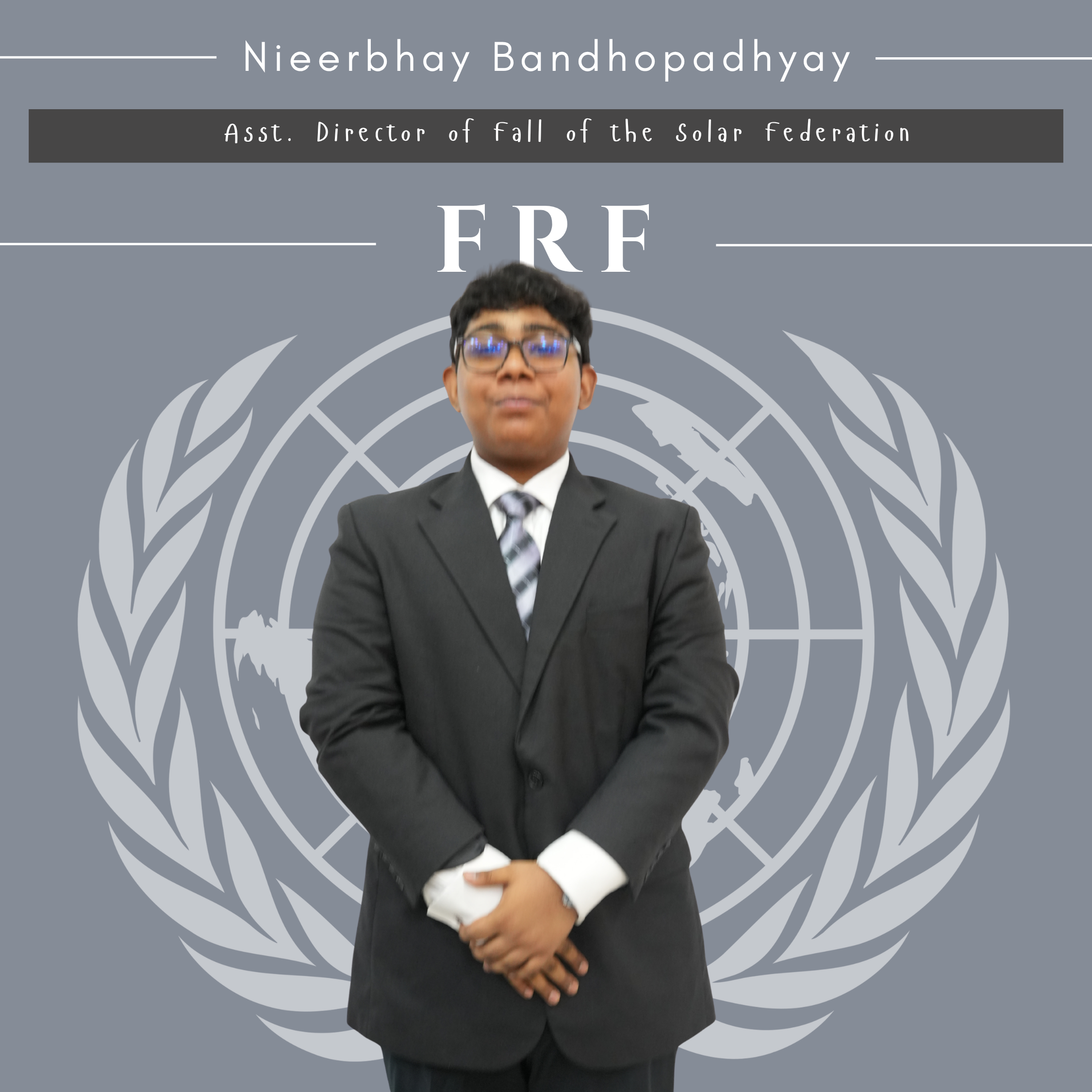
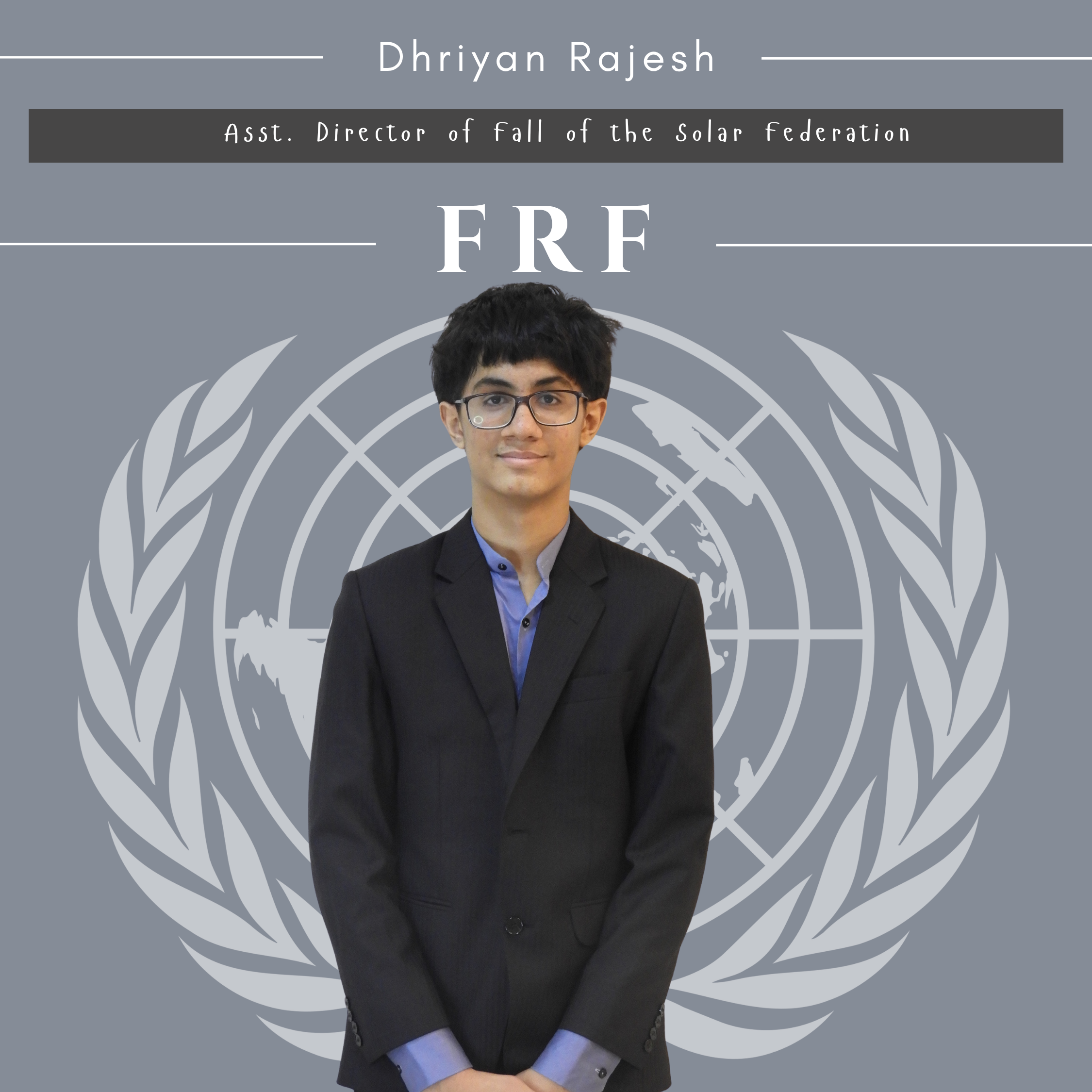
How the room speaks
How the FSF room will actually run — the modes every delegate needs at their fingertips.
The default state of committee. Delegates address the whole floor on the agenda in fixed-length speeches; the list runs continuously until exhausted or suspended.
Structured back-and-forth on a narrower sub-topic. Set a total time, a per-speaker time, and a sharp question — the chair recognises speakers in turn.
Free-form negotiation. Delegates leave their seats to write working papers, form blocs, and hammer out consensus without chair recognition.
Every delegate speaks once, in order, on a set question — no yields, no skips. Levels the room and forces every placard into the record.
The chair opens the floor for procedural business — introducing draft resolutions, amendments, and directives before returning to substantive debate.
A themed speakers' list on a specific sub-agenda or question of the day. Used to spotlight a critical thread before the room moves on.
Session by session
A realistic arc of what each of the six sessions looks like from a delegate's seat.
Roll call, General Speakers' List opens, agendas are set. Land your identity and your headline ask on the record.
Sub-topics get carved out. Blocs start crystallising around shared clauses. First working papers circulate.
Off-placard negotiation. Merge working papers, resolve red lines, and hand a clean draft to the EB.
Drafts are formally introduced. Sponsors defend, signatories back, and the room reads every operative clause.
Friendly and unfriendly amendments. Whip your bloc, count placards, and know when to compromise.
Substantive voting, closing statements, and a final chair debrief before the room adjourns for awards.
How a committee runs, in order
The rhythm every room follows — from opening gavel to closing handshake.
- 01Opening Session
Chairs open committee, welcome delegates, and set the tone.
- 02Roll Call
Delegates confirm presence — present, or present & voting.
- 03Agenda Setting
The room votes on the order of agendas where applicable.
- 04Formal Debate
General Speakers' List runs; positions are placed on record.
- 05Moderated Caucus
Structured back-and-forth on narrower sub-questions.
- 06Unmoderated Caucus
Bloc formation, working papers, and negotiation.
- 07Draft Resolutions
Working papers become draft resolutions once vetted.
- 08Voting Procedure
Amendments, then substantive voting on drafts.
- 09Closing Ceremony
Awards, remarks, and the closing gavel.
Points, Motions & Yields
The procedural vocabulary that moves debate — read this once and you'll never blank on a placard raise.
For a delegate's comfort — audibility, temperature, breaks. Only interrupts a speaker on inaudibility.
Raised when the chair or a delegate has violated the rules of procedure. Cannot interrupt a speaker.
A procedural question about how debate is being run. Directed to the chair, never to another delegate.
A substantive question directed to a speaker who has yielded their time to points of information.
Move to open the General Speakers' List once the agenda is set.
State total time, per-speaker time, and the topic — e.g., '10 minutes, 45 seconds each, on the humanitarian response'.
State a total time — used for informal negotiation, working papers, and bloc formation.
Extend a caucus once it lapses — subject to chair's discretion and a simple majority.
Close debate and move to vote on the draft resolutions on the floor.
End the day's session (adjourn) or pause committee for a defined interval (suspend).
Return the remaining time on your speech to the chair. The safest default.
Hand your remaining time to a specific delegate — they cannot yield again.
Open the floor to substantive questions from the room during your remaining time.
Awards & mentions
Four tiers of recognition, awarded per committee at the closing ceremony.
Awarded to the delegate who best combines substance, procedure, negotiation, and diplomacy across both days.
Recognises consistent quality in speeches, working papers, and bloc leadership.
For delegates who made a distinctive impact — a decisive speech, a critical amendment, or standout collaboration.
Chair-discretion callouts during the closing ceremony for delegates who elevated the room.
Before you walk into committee
Six things every delegate — beginner or veteran — should have done before Day 1.
Read the last five years of statements at the relevant UN body — patterns matter more than headlines.
Once for context, once with a highlighter. Note ambiguities the EB left open — those are your negotiating levers.
One page. Country's stance, past actions, proposed solutions. Submit before the deadline on the Timeline page.
60 seconds. Country identity, agenda framing, one concrete ask. Rehearse until you don't need the paper.
Preamble hooks, three operative clauses, one bold clause you'd fight for. You'll thank yourself in Session II.
Points vs. motions, yields, voting procedure. The Resources page has the full rundown.
Committee FAQ
Rank your top choices on the registration form. The EB balances preference order with MUN experience and room dynamics — early registration meaningfully improves your odds.
Beginner-friendly rooms exist for exactly this. Read the background guide, watch a session on YouTube, and lean on the Delegate Preparation Kit — the difficulty tag on this page tells you what to expect.
Yes. Position papers are required for award eligibility. The deadline is published on the Timeline page after allocations close.
Printed research, your position paper, a laptop or notebook, a pen (ideally two), your ID card, and the conference dress code — Western business formal.
Downloads
Grouped by what you'll need, when you'll need it. Everything drops here as the Executive Board finalises it.
Register for FSF
Lock in your placard in the Fall of the Solar Federation (MS). Allocations run on a preference-plus-experience basis — earlier applicants get first pick on countries.